
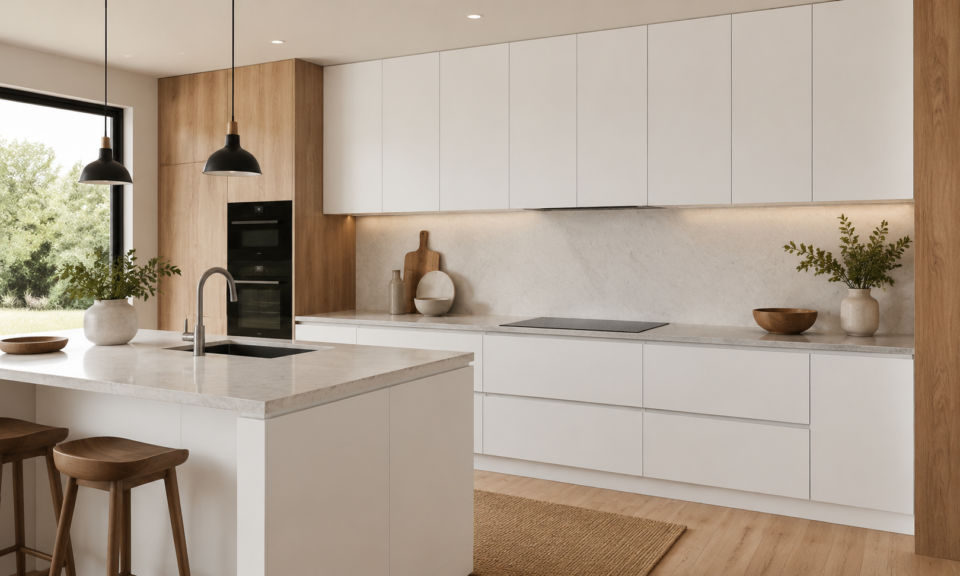
A modern kitchen does not need complicated details to feel stylish. In many homes, the strongest designs rely on clean lines, simple materials, practical storage, and a light color palette. Flat-panel cabinet doors and white finishes work especially well together because both reduce visual clutter. The smooth cabinet fronts create a streamlined appearance, while white surfaces help reflect light and make the kitchen feel brighter. This combination can work in small kitchens, open-concept layouts, apartments, and larger family homes. However, creating a successful white modern kitchen requires more than choosing a simple cabinet door. Homeowners should also consider the finish, hardware, countertop, lighting, storage, and overall layout.
What Are Flat-Panel Cabinet Doors?
Flat-panel cabinet doors have a smooth front without raised or recessed center panels. They are sometimes called slab doors because each cabinet front appears as one simple surface. Homeowners exploring Flat-panel doors for kitchen cabinets often choose this style when they want a cleaner and more contemporary appearance. Unlike traditional cabinet doors, flat-panel designs do not rely on molding, decorative edges, or detailed frames. This gives the cabinetry a simple shape and allows other kitchen features to stand out. Countertops, backsplash materials, lighting, flooring, and hardware can become stronger design elements because the cabinet doors remain visually quiet.
Why Flat-Panel Cabinets Feel Modern
Modern kitchen design often focuses on simplicity and clear visual lines. Flat-panel cabinets support this approach because repeated doors create an uninterrupted surface across the kitchen. When hardware is minimal, the cabinetry can almost appear like part of the wall. This streamlined effect can help a kitchen feel organized even when the room contains many cabinets. Flat-panel doors also work well with modern materials such as quartz countertops, large-format tiles, stainless-steel appliances, and simple pendant lighting. However, flat cabinetry does not need to feel cold. Natural wood flooring, warm lighting, textured backsplashes, or brass hardware can soften the look.
Why White Is a Strong Choice for Modern Kitchens
White remains one of the most flexible cabinet colors because it works with many materials and interior styles. Modern white kitchen cabinets can create a brighter appearance while giving homeowners a neutral foundation for future design changes.
White cabinetry can work with:
- Black hardware
- Stainless-steel appliances
- Brass fixtures
- Natural wood flooring
- Gray countertops
- Marble-look quartz
- Colorful backsplashes
- Warm neutral walls
Because white is neutral, homeowners can change lighting, hardware, paint, or decorative features later without replacing the cabinetry.
White Cabinets Can Make Small Kitchens Feel More Open
Cabinets take up a large amount of visual space. In a small kitchen, dark or highly detailed cabinetry can sometimes make the room feel enclosed. White flat-panel cabinets reduce visual weight in two ways. First, the light finish reflects more available light. Second, the simple door profile removes unnecessary detail. This combination can be especially helpful in galley kitchens, one-wall kitchens, and rooms with limited natural light. Using white upper cabinets can also make walls feel less heavy. Homeowners who want additional contrast can introduce darker base cabinets or a different island finish.
Choosing the Right White Finish
Not every white cabinet looks the same. Some whites have warm yellow, cream, or beige undertones. Others have cooler gray or blue undertones.
Warm white cabinets usually work well with:
- Natural oak flooring
- Cream countertops
- Brass hardware
- Beige backsplashes
- Warm wall colors
Cooler white finishes often pair better with:
- Gray quartz
- Black hardware
- Stainless-steel appliances
- Cool tile
- Modern gray flooring
Homeowners should compare cabinet samples with the actual countertop, flooring, and wall colors before making a final decision. Lighting should also be considered because the same white can appear different during the morning, afternoon, and evening.
Matte vs Glossy Flat-Panel Cabinets
The finish can significantly change the appearance of flat-panel cabinetry.
Matte White Cabinets
Matte finishes create a softer and more understated appearance. They reflect less light and may work well in modern or transitional kitchens. They can also make large cabinet surfaces feel less visually dominant.
Glossy White Cabinets
Gloss finishes reflect more light and can create a very contemporary appearance. This may help a small kitchen feel brighter, but fingerprints, smudges, and marks can be more noticeable on highly reflective surfaces. Homeowners should consider both appearance and maintenance when choosing between matte and glossy finishes.
Hardware Can Completely Change the Design
Flat-panel cabinets provide a simple background, so hardware has a noticeable effect on the final design. Long bar pulls can emphasize horizontal or vertical cabinet lines. Matte black hardware creates a strong contrast against white doors. Brushed nickel provides a softer modern look, while brass can add warmth and make an all-white kitchen feel less clinical. Homeowners can also choose handle-free cabinetry. Integrated pulls, finger channels, and push-to-open mechanisms create an even cleaner appearance. However, homeowners should test these systems before purchasing because ease of use is just as important as appearance.
Pair White Cabinets With the Right Countertop
Countertops play a major role in determining whether a white kitchen feels warm, dramatic, or minimal. White quartz with subtle veining creates a light and continuous appearance. This can work especially well in smaller kitchens. A darker countertop creates contrast and gives white cabinetry more definition. Gray surfaces provide a middle ground and can support a modern neutral palette. Natural stone or marble-look quartz can also introduce texture and movement without changing the cabinet color. When the cabinet doors are very simple, homeowners have more freedom to choose a countertop with noticeable veining or pattern.
Add Warmth to Prevent an All-White Kitchen From Feeling Cold
One concern with white modern kitchens is that the room may feel too plain or sterile. Warm materials can solve this problem without reducing the clean appearance. Natural wood is particularly effective. Wood flooring, stools, shelves, or a butcher-block accent can create warmth against white cabinetry.
Homeowners can also introduce texture through:
- Handmade-look backsplash tile
- Woven lighting fixtures
- Warm metal hardware
- Natural stone
- Wood furniture
- Soft neutral wall colors
The goal is to create contrast in texture rather than adding too many competing colors.
Use Storage to Maintain the Clean Look
A modern kitchen looks best when countertops remain relatively clear. This means storage planning is especially important. Deep drawers can hold pots, pans, and small appliances. Pull-out pantry systems can keep food organized and accessible. Built-in trash storage removes bins from the floor, while vertical dividers can organize cutting boards and baking sheets.
Other useful storage features include:
- Drawer organizers
- Spice pull-outs
- Corner storage systems
- Appliance garages
- Pantry cabinets
- Roll-out shelves
Flat-panel cabinets create a clean exterior, but the interior storage should be just as carefully planned.
Plan the Cabinet Layout Around Daily Use
A modern-looking kitchen can still be frustrating if the cabinet layout is poorly planned. Frequently used items should remain close to the areas where they are needed. Cooking utensils and cookware can be stored near the range. Dishes may be more convenient near the dishwasher. Food-preparation tools should remain close to the main work surface. The layout should also allow appliance doors and drawers to open without blocking walkways. An island can provide valuable storage and preparation space, but it should only be included when enough clearance remains around it. Good cabinet planning focuses on movement and accessibility rather than simply adding the maximum number of cabinets.
Coordinate White Cabinets With Flooring
Flooring can help prevent a white kitchen from appearing too uniform. Medium and light wood floors provide natural warmth. Dark floors can create stronger contrast, while neutral tile or luxury vinyl can maintain a cleaner overall palette. Homeowners should avoid selecting flooring and countertops separately from the cabinetry. Samples should be viewed together because each material affects how the others appear. For example, warm flooring may make a cool white cabinet look slightly blue, while a warm white may look creamier beside gray flooring.
Lighting Matters in a White Kitchen
White surfaces reflect light well, but the kitchen still requires a thoughtful lighting plan. General ceiling lighting provides overall illumination. Pendant lights can define an island or dining area. Under-cabinet lighting improves countertop visibility and reduces shadows beneath upper cabinets. The color temperature of the bulbs can also affect white cabinetry. Warm lighting can soften cool white cabinets, while cooler lighting can make warm whites appear more neutral. Homeowners should test lighting alongside cabinet and countertop samples when possible.
Flat-Panel Cabinets Work Well in Two-Tone Kitchens
Homeowners do not need to use white throughout the entire kitchen. Flat-panel doors make it easy to combine two cabinet colors without creating too much visual complexity.
Popular combinations include:
- White upper cabinets with gray base cabinets
- White perimeter cabinets with a wood island
- White cabinets with a navy island
- White wall cabinets with black lower cabinets
The simple cabinet profile keeps the design controlled even when contrasting colors are introduced. Two-tone layouts can also help define specific areas of an open-concept kitchen.
Think About Maintenance Before Choosing the Finish
Flat-panel cabinets are generally easy to wipe down because they have fewer grooves and decorative edges. However, white surfaces may show spills, food marks, fingerprints, and grease more easily than darker finishes. Regular cleaning helps prevent buildup. Homeowners should use cleaning products recommended for the specific cabinet finish. Harsh chemicals or abrasive pads can damage painted, laminate, or specialty surfaces. Cabinet hardware should also be cleaned regularly, especially around frequently used drawers and doors.
Avoid Common Modern Kitchen Design Mistakes
One common mistake is making every surface white. White cabinets, countertops, walls, flooring, and backsplash can create a flat appearance when there is not enough texture or contrast. Another mistake is choosing glossy cabinetry without considering fingerprints and cleaning.
Homeowners should also avoid:
- Selecting cabinet color without checking lighting
- Ignoring countertop undertones
- Using oversized hardware
- Adding an island without enough clearance
- Focusing on style while neglecting storage
- Choosing trends that conflict with the rest of the home
Modern design works best when simplicity is balanced with practical details.
Final Thoughts
Flat-panel cabinet doors and white finishes create a strong foundation for a modern kitchen. The smooth cabinet fronts reduce visual clutter, while white finishes can help the room feel brighter and more open. Together, they work well in compact kitchens, larger open layouts, and many contemporary renovation styles. However, the final result depends on more than cabinet doors and color. Homeowners should consider finish type, hardware, lighting, countertops, flooring, storage, and layout as parts of one complete design. By balancing clean lines with warm materials and practical storage, homeowners can create a white modern kitchen that feels fresh without becoming cold or overly minimal.
