
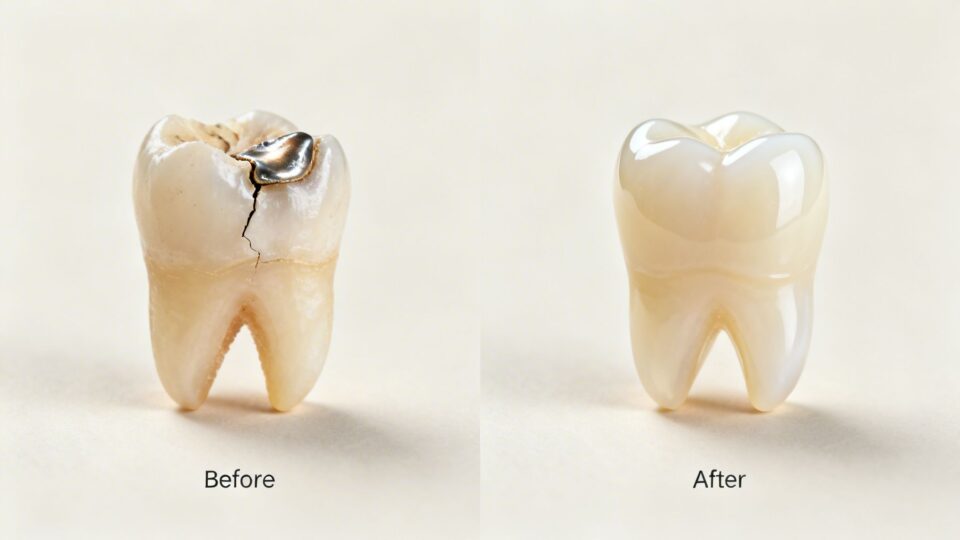
A filling can repair many small and moderate cavities. However, it may not provide enough protection when a tooth has lost a large amount of its natural structure. Teeth weakened by deep decay, fractures, wear, or previous dental work often need a restoration that covers more than one small area.
A dental crown fits over the visible portion of a prepared tooth. It restores the tooth’s shape, supports its remaining structure, and creates a new chewing surface. When appearance is also important, porcelain crowns may offer a natural-looking solution because their color and surface can be designed to resemble tooth enamel.
Still, a crown should not be chosen based on appearance alone. The condition of the tooth, strength of the bite, location in the mouth, gum health, and available restorative materials must all be considered before treatment begins.
When Is a Filling No Longer Enough?
A filling replaces a specific section of tooth structure lost to decay or damage. It depends on the surrounding tooth for support. When enough healthy enamel and dentin remain, a filling may restore the tooth successfully.
Problems arise when the damaged area becomes too large. A very wide filling can leave the remaining tooth walls thin and vulnerable. Normal chewing pressure may eventually cause one of these walls to bend, crack, or break.
A crown may be considered when a tooth has:
- A large cavity that affects several surfaces
- A filling that occupies much of the tooth
- A major chip or fracture
- Severe wear caused by grinding
- Damage following root canal treatment
- A shape that affects normal function
- Significant discoloration that cannot be corrected predictably
- Weak areas that may break under chewing pressure
The decision is not based only on the visible size of a cavity. A dentist must examine how much strong tooth structure remains and whether it can safely support another filling.
How Does a Porcelain Crown Protect a Tooth?
A crown covers the prepared tooth above the gumline. Instead of filling only the damaged section, it surrounds the remaining structure and helps hold it together.
This coverage can distribute biting pressure over a broader area. It may reduce the chance that a weakened section will split during chewing. The crown also restores the tooth’s height, contours, and contact with neighboring teeth.
Porcelain is valued for its ability to copy the appearance of natural enamel. Its shade, brightness, surface texture, and level of translucency can be adjusted to blend with nearby teeth.
Patients considering Porcelain crowns in Cudahy should understand that the material is only one part of the result. Careful preparation, accurate impressions or scans, proper bite adjustment, and good home care also influence how the crown looks and functions.
Are All Tooth-Colored Crowns the Same?
The phrase “porcelain crown” can describe more than one type of restoration. Some crowns are made entirely from ceramic material. Others may combine porcelain with another supporting material.
Different ceramic systems have different levels of strength, translucency, and suitability for certain areas of the mouth. A highly natural-looking material may work well for a front tooth, while a back tooth exposed to stronger chewing pressure may require a different design.
The best material depends on:
- Whether the tooth is at the front or back
- How much biting force it receives
- The amount of healthy tooth structure remaining
- Whether the patient grinds or clenches
- The color of the underlying tooth
- Available space between the teeth
- The appearance of neighboring teeth
- The patient’s cosmetic expectations
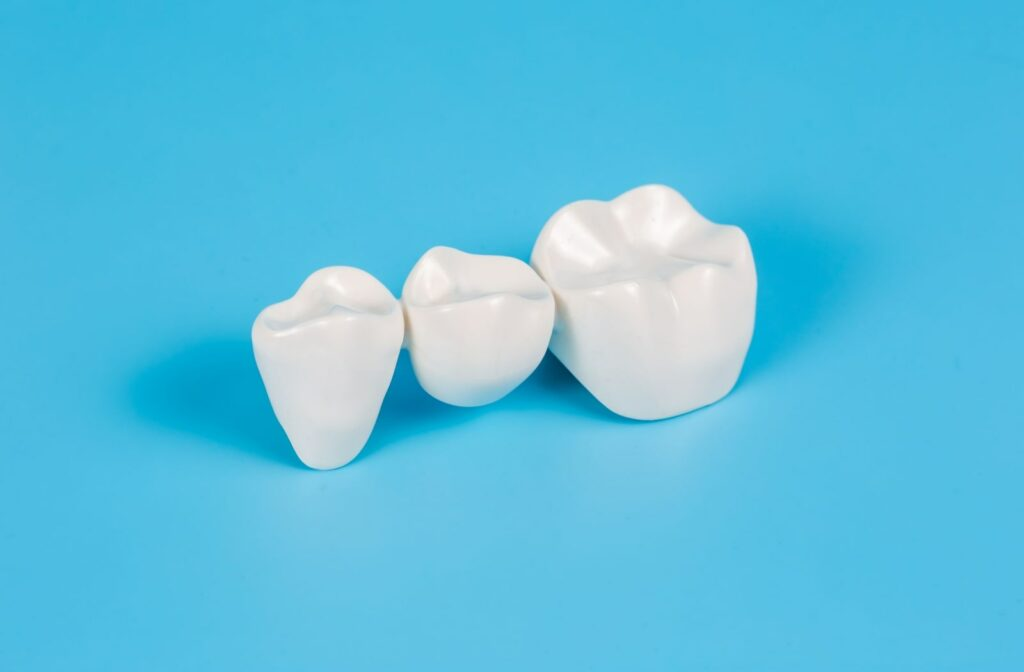
No crown material is ideal for every person or every tooth. A dental examination helps match the restoration to the clinical situation.
Why Shade Matching Requires Careful Planning
Natural teeth are not simply one solid shade of white. They may be more translucent near the biting edge, slightly warmer near the gumline, and different in brightness from one side of the mouth to the other.
For that reason, selecting a crown shade requires more than choosing the nearest white color. The dentist may consider the tooth’s base color, neighboring teeth, lighting conditions, and the patient’s overall smile.
The final appearance may also be affected by the color underneath the crown. A severely darkened tooth or metal post can sometimes influence how a thin ceramic restoration looks. The dentist may adjust the material, thickness, or internal design to manage this issue.
Patients planning Dental Crowns in Cudahy should discuss whitening before the crown is made if they want a lighter overall smile. Porcelain does not respond to bleaching in the same way natural enamel does, so changing the surrounding tooth color later may create a mismatch.
What Happens During Crown Preparation?
The process normally begins with an examination and dental imaging when needed. The dentist checks the tooth, surrounding bone, gums, existing restorations, and bite. Any active decay must be removed before the crown can be made.
The area is numbed, and the tooth is carefully shaped to create enough room for the restoration. The dentist tries to preserve healthy structure while developing a stable foundation for the crown.
An impression or digital scan records the prepared tooth, neighboring teeth, and bite. This information is used to create a crown with the correct shape and fit.
A temporary crown may protect the tooth while the final restoration is being produced. Because temporary cement is designed for short-term use, patients should avoid very sticky or hard foods during this stage.
At the placement visit, the dentist checks the permanent crown’s fit, color, shape, contact with neighboring teeth, and bite. Adjustments may be made before the crown is bonded or cemented in place.
Why Healthy Gums Matter to the Final Result
A crown does not exist separately from the gum tissue around it. Swollen or bleeding gums can make it harder to capture an accurate impression and may affect the appearance of the final restoration.
Untreated gum problems can also make the crown margin difficult to keep clean. Plaque collecting around this area may contribute to inflammation or decay in the exposed tooth structure.
Before providing Dental Crown Services Cudahy, a dentist may recommend professional cleaning or treatment for active gum disease. This is not an unnecessary delay. A healthy foundation can improve accuracy, comfort, and long-term maintenance.
Patients should continue brushing twice daily and cleaning between their teeth. Floss, interdental brushes, or another recommended cleaning tool can help remove plaque near the crown’s edges.
What Should You Expect From a Temporary Crown?
A temporary crown protects the prepared tooth and helps maintain spacing until the permanent restoration is ready. It may not match the final crown perfectly in color, smoothness, or shape.
Temporary crowns are attached with weaker cement so they can be removed at the next appointment. Sticky foods such as caramel, gum, and taffy may pull them loose. Hard foods can also crack the temporary material or place pressure on the prepared tooth.
Chew on the opposite side when possible. When flossing, follow the dental team’s instructions carefully. In many cases, sliding the floss out through the side is safer than lifting it directly upward.
Contact the office if the temporary crown breaks, moves, or comes off. Do not attach it with household glue. Leaving the tooth uncovered may lead to sensitivity, shifting, or contamination.
Can a Crown Develop Problems Later?
A crowned tooth can still develop decay. The porcelain surface itself does not get a cavity, but the natural tooth near the crown margin remains vulnerable to bacteria.
A crown may also loosen, chip, crack, or wear over time. Grinding, biting hard objects, untreated decay, gum changes, and injury can increase these risks.
Warning signs that need an evaluation include:
- Pain or sensitivity around the crowned tooth
- Discomfort when biting
- A loose or moving crown
- A rough or sharp edge
- Food repeatedly catching near the crown
- Gum swelling or bleeding
- A dark line or visible opening at the edge
- An unpleasant taste from one area
Not every symptom means the crown must be replaced. Sometimes a bite adjustment or treatment for the surrounding gum is enough. An examination is necessary to identify the actual cause.
How Long Can a Porcelain Crown Last?
There is no fixed lifespan that applies to every crown. Its longevity depends on the original condition of the tooth, material choice, fit, bite forces, oral hygiene, diet, and daily habits.
A person who clenches or grinds may place much more pressure on a crown than someone with a lighter bite. A protective nightguard may be recommended when grinding is present.
Other helpful habits include:
- Brushing with fluoride toothpaste
- Cleaning between the teeth every day
- Attending regular dental examinations
- Avoiding chewing ice and hard objects
- Not using teeth to open packages
- Seeking care when the crown feels different
- Managing dry mouth and cavity risk
Regular checkups allow a Cudahy dentist to examine the crown’s margins, supporting tooth, gums, and bite before a small concern becomes more difficult to manage.
Crown, Veneer, or Bonding: What Is the Difference?
A crown generally covers most or all of the visible tooth above the gumline. It is often used when the tooth needs meaningful structural support.
A veneer covers mainly the front surface of a tooth and is usually selected to change appearance. It may not provide enough protection for a heavily filled or badly fractured tooth.
Dental bonding uses tooth-colored resin applied directly to the tooth. It can be useful for small chips, gaps, or shape changes, but it may not offer the same coverage as a crown.
The most conservative suitable option is usually preferred. A dentist should recommend treatment based on the tooth’s health and structure rather than choosing the same restoration for every cosmetic concern.
Questions to Ask Before Choosing a Crown
A clear conversation before treatment helps patients understand what is being recommended and why. Useful questions include:
- Why does this tooth need a crown instead of a filling?
- Is there active decay or a crack?
- Which crown material is appropriate for this tooth?
- Will the tooth need root canal treatment first?
- How will the shade be matched?
- Will I wear a temporary crown?
- What does the treatment estimate include?
- How should I care for the crown afterward?
- Do I need protection from grinding?
Before beginning dental crown treatments in Cudahy, patients should receive an examination and a treatment plan based on their individual oral health needs.
Final Thoughts
A badly damaged tooth may need more support than a filling can provide. A porcelain crown can cover weakened structure, restore normal shape, improve chewing, and create a natural-looking appearance.
Successful treatment depends on more than selecting a tooth-colored material. The health of the tooth and gums, crown design, bite, preparation, fit, and daily maintenance all matter.
If you have a large filling, cracked tooth, severe wear, or a tooth that has recently received root canal treatment, arrange a dental evaluation. Early care may provide more options for protecting the tooth before further structure is lost.
Frequently Asked Questions
Do porcelain crowns stain like natural teeth?
Porcelain is generally resistant to staining, but plaque and surface discoloration can still collect around a crown. Natural teeth may also change color over time, creating a difference. Regular cleaning and dental examinations help maintain a balanced appearance.
Does getting a porcelain crown hurt?
Local anesthesia is normally used while the tooth is prepared. Mild gum tenderness or temperature sensitivity may occur afterward. Contact the dental office if pain becomes severe, the bite feels uneven, or discomfort continues instead of gradually improving.
Can a porcelain crown be whitened?
Whitening treatments do not lighten porcelain like they lighten natural enamel. If you are considering teeth whitening, discuss it before the crown shade is selected. This can help the final restoration match the planned color of your smile.
